
Capstone robotics
AutoNav
A completed capstone prototype for low-cost, indoor assistive navigation using an autonomous smart-cane platform.
Overview
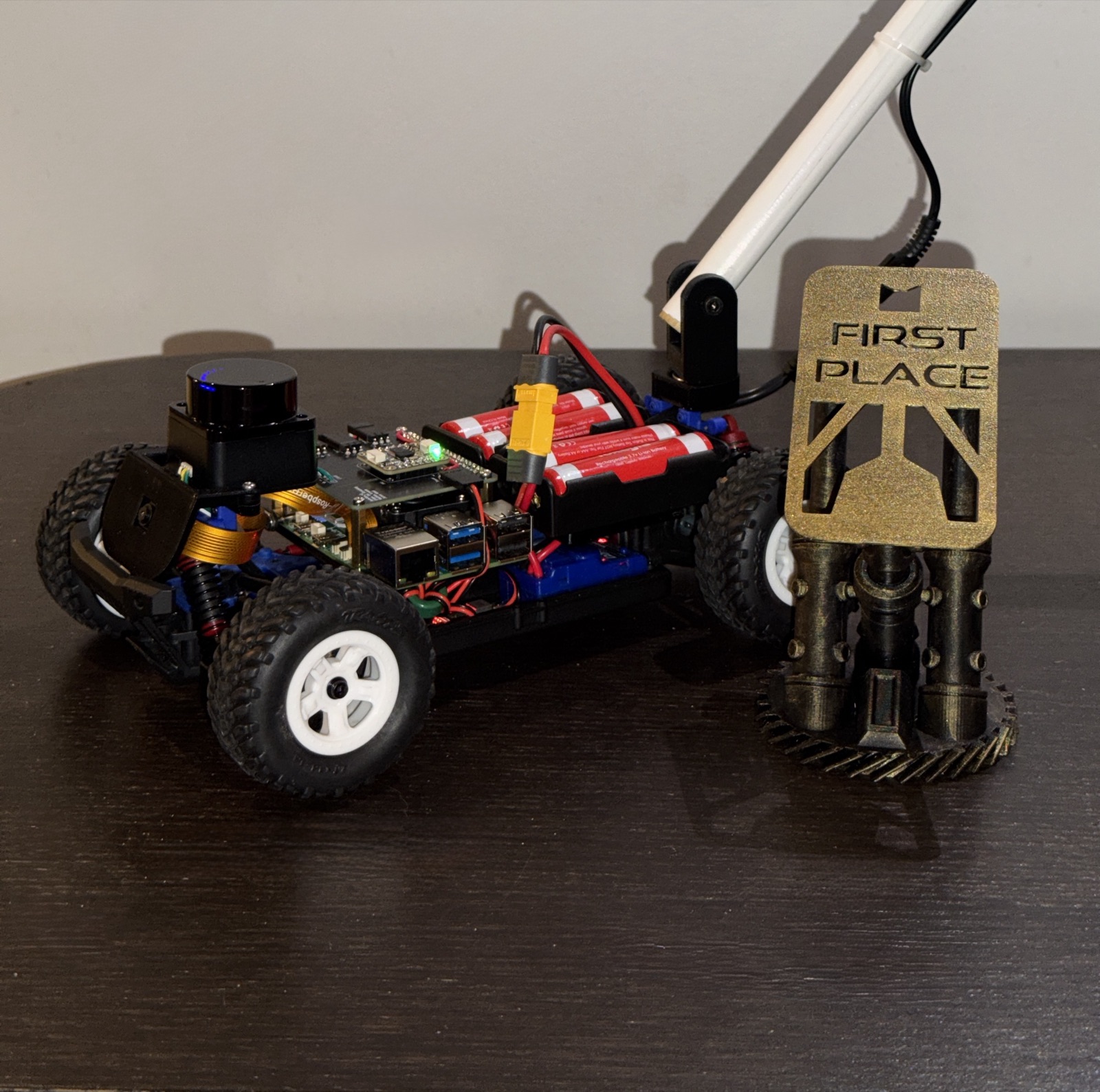
AutoNav was a completed University of Victoria capstone project exploring low-cost indoor navigation assistance for people with visual impairments. The prototype paired a cane handle with a 1/18-scale mobile base carrying a Raspberry Pi 5, LD19 LiDAR, BNO085 IMU, and Pi Camera.
The project combined a site-specific region graph, visual place recognition, reinforcement-learning control, and a browser interface. The same physical platform later became the starting point for the ROS 2 PreRunner research system.
Problem and context
GPS does not provide dependable indoor positioning, while familiar mobility aids do not provide autonomous route guidance or scene descriptions. The capstone asked whether commodity sensors and compute could support a lower-cost prototype for mapped schools, offices, and homes.
The central integration challenge was spanning mechanical design, power, sensing, simulation, learned control, localization, safety checks, and a usable cane interface within one prototype.
Technical approach
A digital twin of the third floor of UVic’s Engineering Lab Wing was built in Isaac Sim and divided into approximately 49 connected regions. A shortest-path graph selected region routes, while a PPO policy used LiDAR and vehicle-state observations to execute local motion.
On the physical platform, EfficientNet-B0 image embeddings provided visual place recognition against a database of labelled regions. A secondary cane control captured a camera image for scene description and text-to-speech output through the web interface.
Key engineering details
Simulation environment
The Isaac Lab task models region-to-region routing, LiDAR noise and dropouts, a two-value throttle and steering action space, waypoint rewards, and collision or stall termination.
Hardware runtime
The on-device application coordinates sensor drivers, VPR, region navigation, policy inference, safety checks, logging, and a Dash telemetry and control interface.
Physical design
A custom chassis, breakout PCB, battery system, and ergonomic cane handle packaged the compute and sensors on an off-the-shelf vehicle base.
System boundary
The implementation was intentionally site-specific: the region graph, visual reference database, and trained policy targeted one mapped building and hardware stack.
Results and outcomes
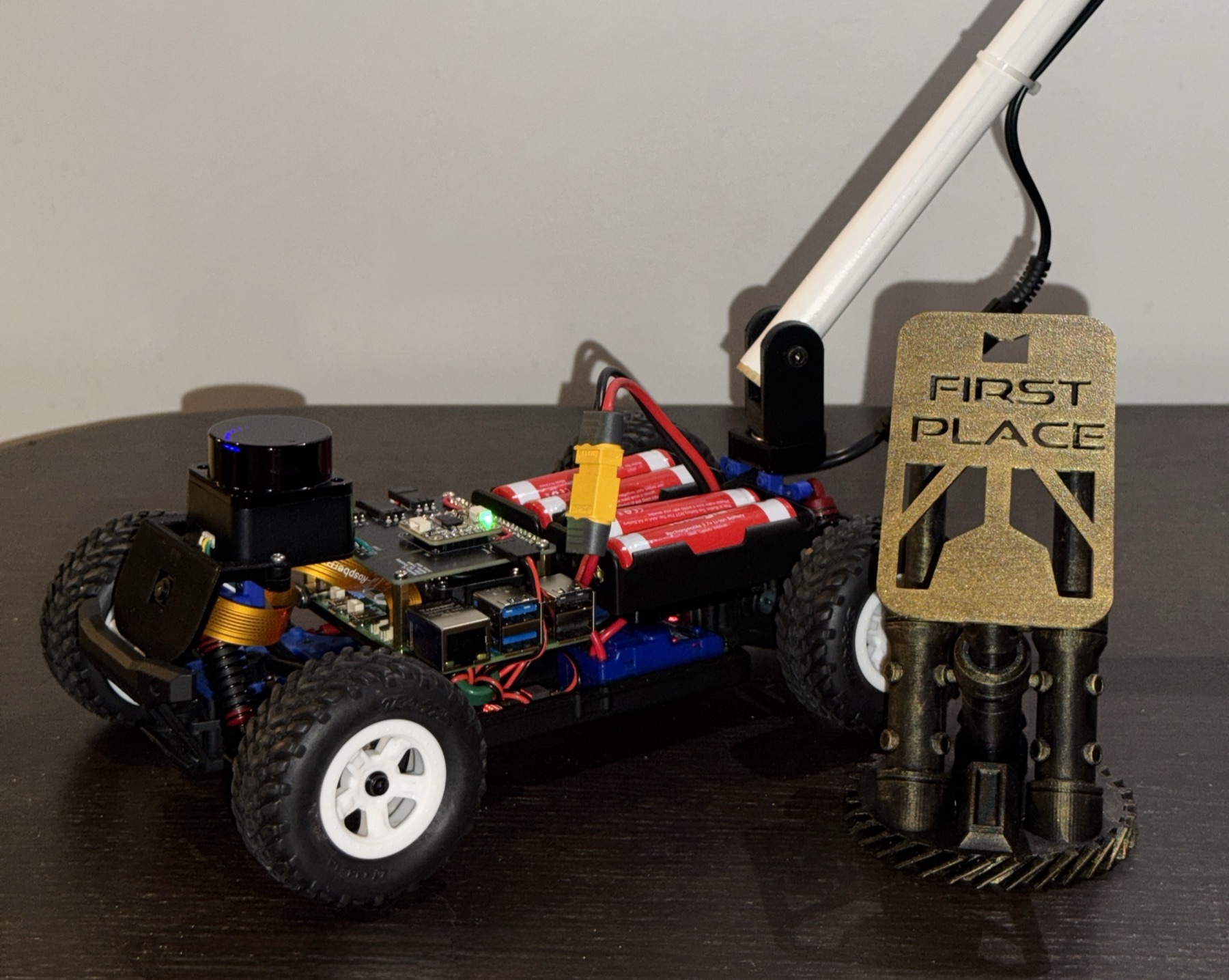
The generalized hardware policy demonstrated hallway following and obstacle avoidance in known and unfamiliar spaces. The full simulation-trained route policy did not transfer reliably, and testing identified a right-turn bias caused by training-data imbalance.
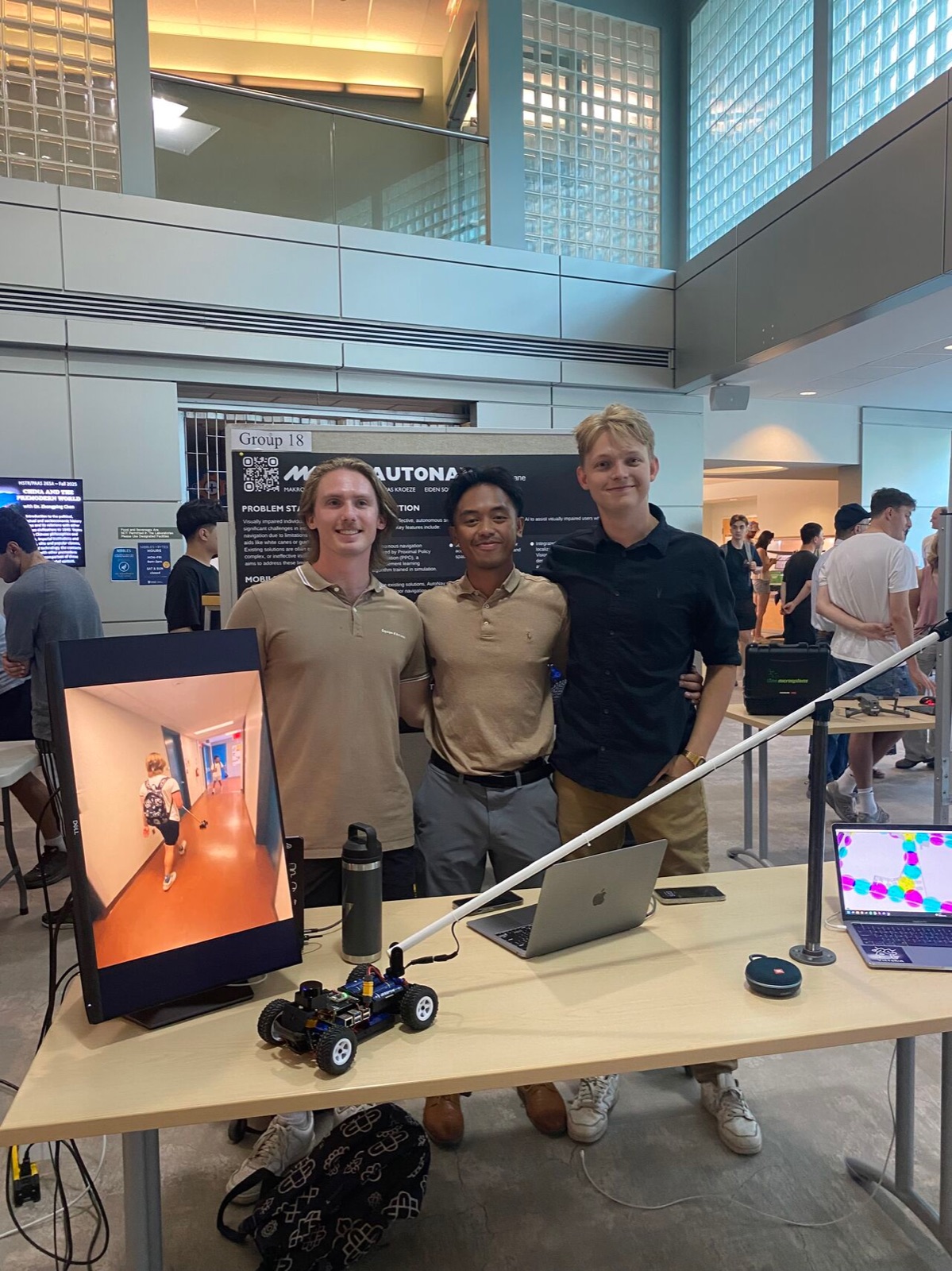
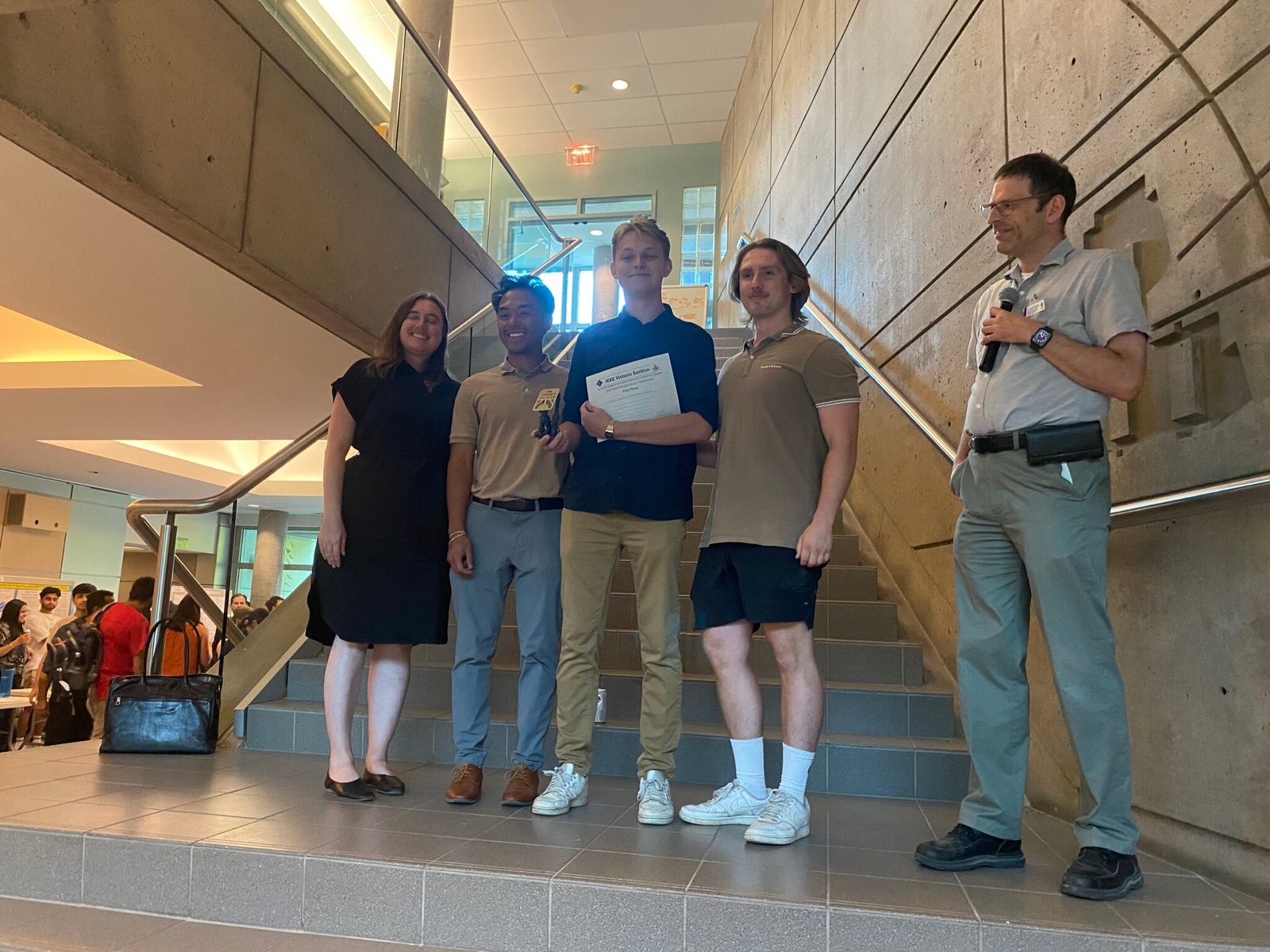
AutoNav received first place in the ECE 499 Capstone Competition. The later PreRunner work replaces the learned navigation stack with a measured ROS 2 mapping, estimation, and Nav2 foundation before returning to racing control.